



Top Flu Season Survival Tips for Parents and Kids
Sponsored Content
During peak flu season, we all try to dodge illness, but what happens when the flu hits? Whether you’re staying home from work because you’re sick, or caring for your child late at night, it can throw the entire household off routine. That’s why City Parent spoke with family physician, Dr. Jeffrey Habert, to share practical tips for recovery—so you and your family can get back to your regular schedule in no time.
Upgrade Your Quality of Rest
We all know rest is essential for recovery, but quality rest is key. Scrolling through social media or watching TV can be overstimulating, which makes it harder to wind down when your body needs it most. Screens disrupt sleep by blocking melatonin with blue light, spiking dopamine for false excitement, and raising cortisol. To help your body fully recover, dim the lights and give your brain time away from screens.
Rehydration is Key
When we’re sick with the flu or stomach bug, dehydration is common because of fluid loss from symptoms like vomiting or diarrhea or just from a lack of food and water intake. Water is sometimes not enough, and sports drinks don’t contain the optimal balance of sodium and sugar. Parents sometimes turn to flat pop or juice, but these, like sports drinks, are high in sugar and can worsen symptoms.
To prevent dehydration, I recommend oral rehydration solutions like Pedialyte. It’s not just for your kids; it’s effective for adults, too, with optimal balance of electrolytes and sugar. It has three times the sodium, an electrolyte, and 50% less sugar than sports drinks, per litre, which is why I recommend keeping it stocked, because no one wants to do a pharmacy run when they’re sick.
Foods for Recovery
If you have a stomach illness (gastro), your digestive system may be more sensitive than usual, so stick with bland, easy-to-digest foods such as bananas, rice, applesauce, and toast. Avoid spicy, fatty, or acidic foods. If solid food is hard to tolerate, clear fluids and light broths can help with hydration and energy. As symptoms settle, gradually return to your usual diet, adding probiotic-rich foods like yogurt or kefir to support gut recovery.
If you have flu-like symptoms or a low appetite from illness, it’s common to have little interest in food even without stomach symptoms. You don’t need to force eating—focus on preventing dehydration. Eat small amounts of whatever feels appealing and easy to tolerate, such as soups, smoothies, or simple meals. As your appetite returns, slowly resume your normal diet.
Gentle Movement
When it comes to activities, people often jump from zero to 100 too quickly and overdo it. Even if you’re feeling better, you’re not necessarily out of the woods. Avoid strenuous exercise until fully recovered. Once fever subsides, light activity like short walks or gentle stretching can improve circulation and reduce stiffness. Gentle movement can boost energy and recovery without overtaxing the body.
Protect the Home from Germs
It’s important to prevent germs from spreading to family and friends. That means taking steps like washing our hands thoroughly, sanitizing surfaces such as doorknobs, toys, counters, etc., improving airflow by opening windows or using fans, and avoiding sharing items such as hand towels. These precautions help contain illnesses and protect those around you and your family from getting sick.
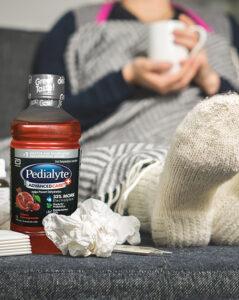
When the flu or gastro strikes, these simple yet effective tips can help you and your family bounce back so you can focus on moments that matter most. Start with plenty of rest and make sure you’re stocked up on essentials like Pedialyte 1L bottles, Powder Sticks, and if nausea makes drinking difficult, Pedialyte offers Freezer Pops, which are a great alternative.
Planning ahead means you won’t have to brave the snow when you’re under the weather or caring for a sick kiddo. With these essentials ready, you can focus on feeling better and get back to enjoying the outdoors instead of hiding from it.
You can find Pedialyte on Amazon, Walmart, at your local pharmacy, or grocery store.
Want to learn more? Ask your healthcare provider about Pedialyte or visit Pedialyte.ca.
![ONK City Parent Magazine Sponsored Article Low Iron For Kids MARCH 2026 FINAL [REWORK]](https://cityparent.com/wp-content/uploads/2026/03/ONK-City-Parent-Magazine-Sponsored-Article-Low-Iron-For-Kids-MARCH-2026-FINAL-REWORK-scaled-800x600.jpg)